NPO CNA: What It Means and Why It Matters for Nurse Aides
Published October 6, 2026
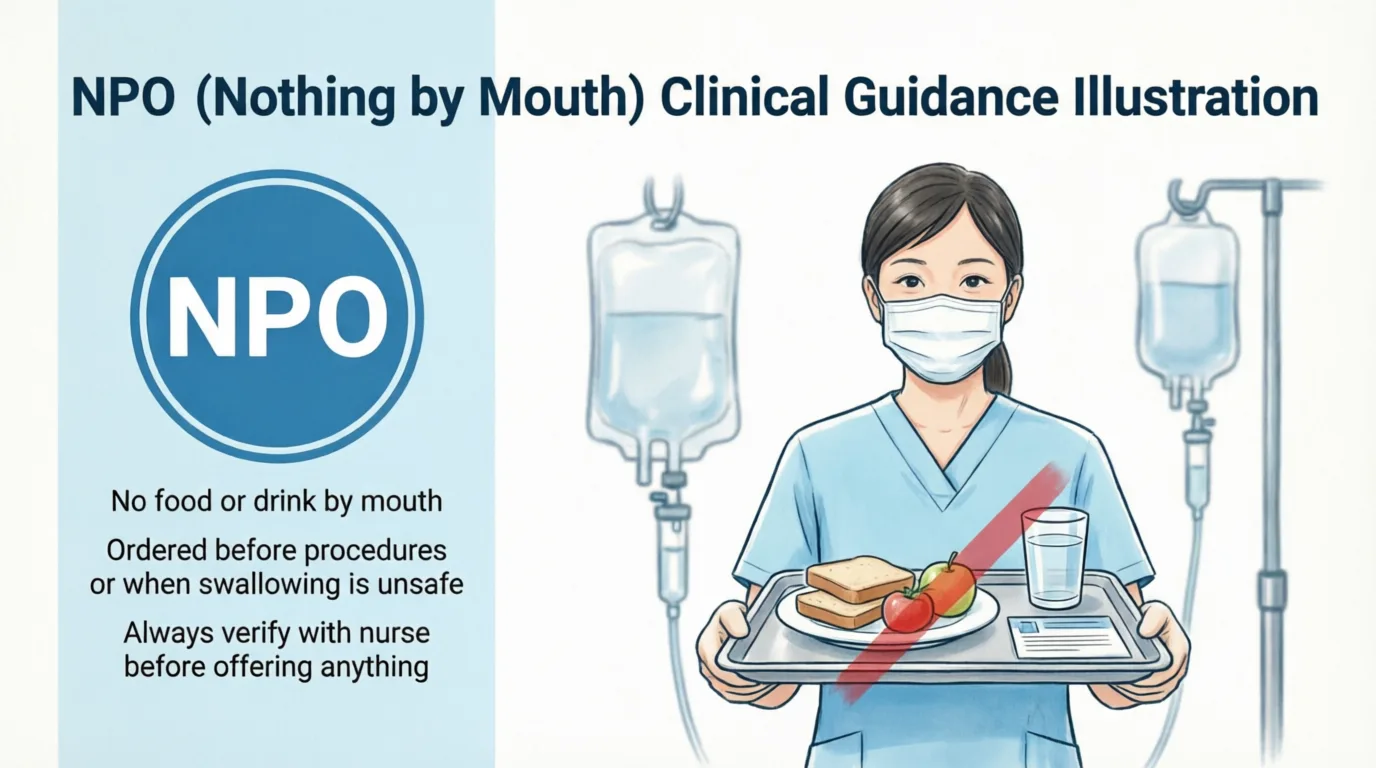
As a CNA, you'll often see the abbreviation NPO on a patient's chart or care plan. It stands for nil per os, a Latin phrase meaning "nothing by mouth." In simple terms, it means the patient should not eat or drink anything. This includes water, ice chips, gum, and even medications taken orally. Understanding NPO is vital because it directly affects patient safety and comfort. In this guide, we'll explain what NPO means, why it's ordered, and what you need to do as a CNA.
What Does NPO Mean in CNA Practice?
NPO is a medical order that restricts a patient from taking anything by mouth. As a CNA, you play a key role in enforcing this order. You might see NPO orders before surgery, during certain diagnostic tests, or when a patient has difficulty swallowing. It's your responsibility to ensure the patient doesn't consume anything orally and to report any violations immediately. Remember, NPO is not just about food, it includes all oral intake.
Common Reasons for NPO Orders
There are several reasons why a doctor might order NPO status:
- Surgery: To prevent aspiration during anesthesia, patients are often NPO after midnight before a procedure.
- Diagnostic tests: Some tests, like blood work or imaging, require an empty stomach for accurate results.
- Swallowing difficulties: Patients with stroke or other conditions may be NPO to prevent choking and aspiration pneumonia.
- Gastrointestinal issues: Conditions like bowel obstruction or pancreatitis may require bowel rest.
As a CNA, you should be aware of these reasons so you can explain to patients why they can't eat or drink.
Your Role as a CNA When a Patient Is NPO
When a patient is NPO, your responsibilities include:
- Check the care plan: Always verify NPO status at the start of your shift and before meals.
- Remove food and fluids: Ensure no food or drinks are within the patient's reach, including water pitchers and bedside snacks.
- Educate the patient and family: Politely explain why the patient cannot eat or drink. Use simple language and be empathetic.
- Monitor for compliance: If you see the patient eating or drinking, stop them immediately and notify the nurse.
- Provide oral care: Even NPO patients need mouth care. Offer frequent oral hygiene to keep the mouth moist and comfortable.
- Document and report: Record any oral intake and report to the nurse. If a patient accidentally consumes something, report it right away.
These steps are critical for patient safety and are often tested on the CNA exam. For more clinical skills practice, check out our CNA Skills Test practice pdf.
NPO and the CNA Exam
NPO is a common topic on the CNA written and skills exams. You might be asked questions like:
- What does NPO mean?
- What should you do if a patient on NPO asks for water?
- How do you provide oral care to an NPO patient?
To prepare, review the principles of NPO care and practice scenarios. Our free CNA practice test with answers includes questions on NPO and other clinical skills. Also, understanding related concepts like CNA scope of practice helps you know your boundaries.
Special Considerations for NPO Patients
Oral Care
NPO patients often experience dry mouth and discomfort. Provide oral care every 2 hours or as needed. Use a soft toothbrush, moist swabs, and lip balm. This is a skill you'll perform in clinical settings and may be tested on.
Emotional Support
Being NPO can be frustrating, especially if the patient is hungry or thirsty. Offer reassurance and explain the reason for the restriction. Sometimes, you can offer ice chips if the order allows—but always check first.
Monitoring for Complications
Watch for signs of dehydration or malnutrition if NPO status is prolonged. Report any concerns to the nurse. Also, be alert for aspiration if the patient tries to eat despite orders.
Frequently Asked Questions About NPO
Can a patient on NPO have ice chips?
Only if the doctor orders it. Ice chips are considered oral intake, so always verify with the nurse.
What if a patient refuses to follow NPO?
Stay calm, explain the importance, and notify the nurse immediately. Never force the patient, but document the incident.
Does NPO include medications?
Yes, unless the doctor specifies otherwise. Some medications may be given with a small sip of water if ordered.
For more answers to common CNA questions, visit our FAQs page.
Conclusion
Understanding NPO is an essential part of CNA clinical skills. It ensures patient safety and helps you provide competent care. Always follow the care plan, communicate with the nurse, and treat patients with compassion. Mastering NPO will not only help you on the exam but also in your daily work as a CNA.