Modes of Transmission: CNA Infection Control Guide
Published October 1, 2026
As a CNA, you are the frontline defense against infections in healthcare settings. Understanding the modes of transmission is essential for preventing the spread of pathogens and protecting your residents, yourself, and your coworkers. This guide breaks down the six main routes of transmission and how to apply standard precautions in your daily work.
What Are Modes of Transmission?
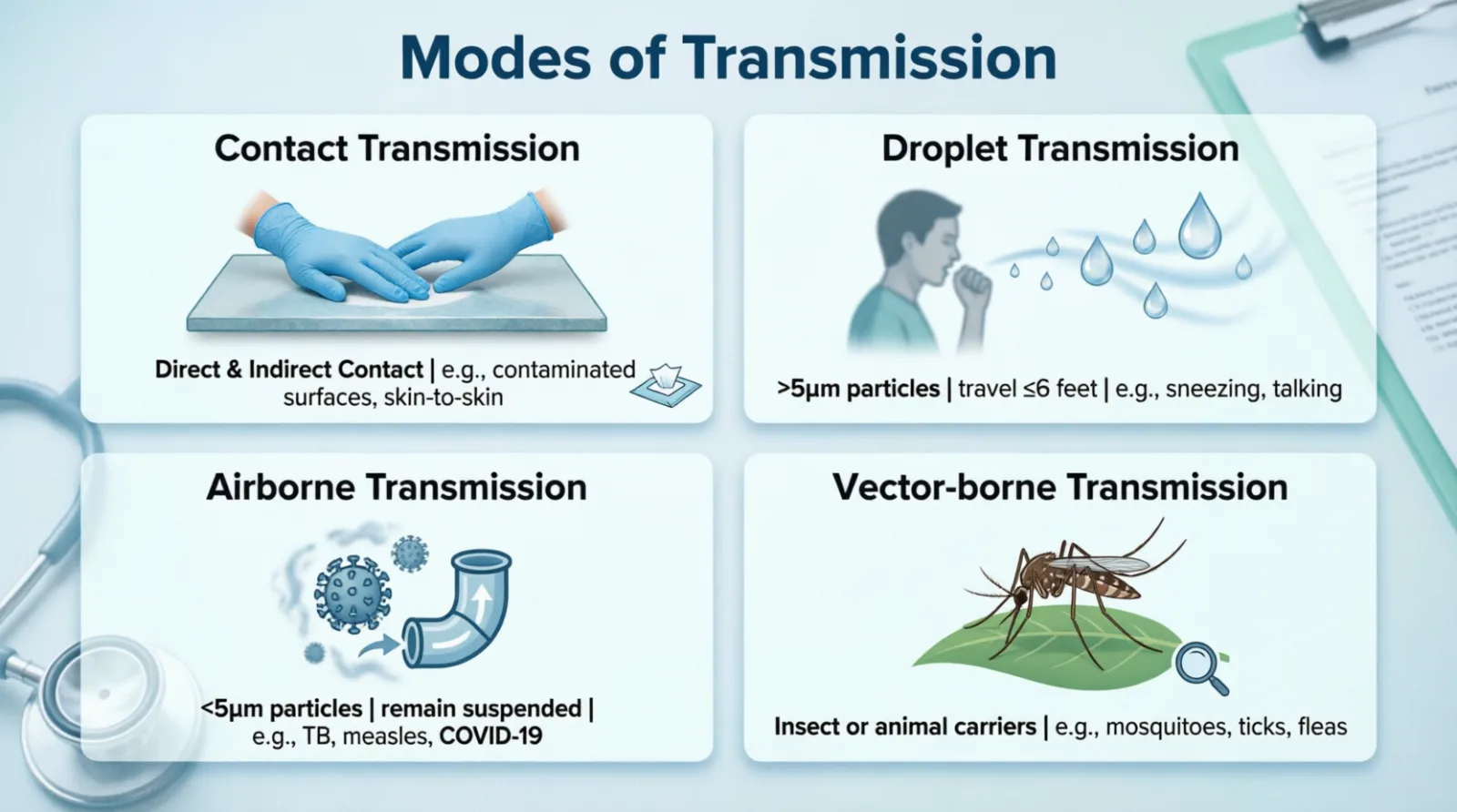
Modes of transmission refer to how infectious agents move from a source (like an infected person or contaminated object) to a susceptible host. In the chain of infection, transmission is the crucial link that CNAs can break through proper infection control practices. The main modes include contact, droplet, airborne, vehicle, and vector-borne transmission.
1. Contact Transmission
Contact transmission is the most common mode in healthcare settings. It occurs when pathogens are transferred through direct or indirect contact.
Direct Contact
This happens when an infected person touches a susceptible host, such as during repositioning, bathing, or transferring a resident. Pathogens like MRSA and C. difficile can spread this way.
Indirect Contact
This occurs when a contaminated object (fomite) transfers pathogens. Examples include blood pressure cuffs, stethoscopes, bed rails, and even your own hands if not properly cleaned. Hand hygiene is your best defense against indirect contact.
2. Droplet Transmission
Droplets are large particles (>5 microns) that travel short distances (usually up to 3 feet) when an infected person coughs, sneezes, talks, or during procedures like suctioning. Examples include influenza, pertussis, and COVID-19. To prevent droplet transmission, use a surgical mask and ensure the resident wears a mask when possible. Follow droplet precautions, which include a private room or cohorting.
3. Airborne Transmission
Airborne particles are smaller (<5 microns) and can remain suspended in the air for long periods, traveling farther than droplets. Diseases like tuberculosis, measles, and chickenpox spread this way. For airborne precautions, you need an N95 respirator, a negative-pressure room, and a fit test to ensure proper seal. Always follow your facility's protocol for airborne isolation.
4. Vehicle Transmission
Vehicle transmission occurs through contaminated inanimate objects or substances like food, water, medications, and blood. For example, hepatitis B can spread through contaminated blood, and Salmonella through contaminated food. As a CNA, ensure proper food handling, use standard precautions with blood and body fluids, and never share medications or supplies between residents.
5. Vector-Borne Transmission
Vectors are living organisms like mosquitoes, ticks, and fleas that transmit pathogens. While less common in healthcare facilities, diseases like West Nile virus and Lyme disease are vector-borne. In long-term care, ensure residents are protected from insect bites, especially if they spend time outdoors.
Breaking the Chain: Your Role as a CNA
You can interrupt transmission with consistent infection control practices. Key steps include:
- Perform hand hygiene before and after every resident contact, and after touching contaminated surfaces.
- Use personal protective equipment (PPE) correctly, gloves, gowns, masks, and eye protection as indicated.
- Follow isolation precautions as posted on the resident's door.
- Clean and disinfect shared equipment between residents.
- Handle food and linens safely to prevent vehicle transmission.
For a deeper dive into infection control, check out our CNA infection control exam tips to boost your knowledge and test readiness.
Transmission-Based Precautions
Beyond standard precautions, transmission-based precautions are used for residents with known or suspected infections. These include:
- Contact precautions: For MRSA, VRE, C. difficile, and scabies. Requires gloves and gown for all contact.
- Droplet precautions: For influenza, mumps, and pertussis. Requires a surgical mask.
- Airborne precautions: For tuberculosis, measles, and chickenpox. Requires an N95 respirator and negative-pressure room.
Always check the signage and follow your facility's policies. When in doubt, ask your charge nurse.
Why This Matters for Your CNA Exam
Infection control is a major topic on the CNA written and skills exams. You will be tested on modes of transmission, proper handwashing, PPE use, and isolation precautions. To practice, try our free CNA practice test with answers and review the Promotion of Safety practice test for scenario-based questions.
Authoritative Resources
For the latest guidelines, refer to the CDC's infection control guidelines and your state's nurse aide registry. These sources provide evidence-based practices to keep you and your residents safe.
Mastering modes of transmission is not just about passing a test, it's about providing safe, compassionate care every day. Stay vigilant, practice good hygiene, and never hesitate to ask questions. Your diligence saves lives.