
What Is Considered Afebrile? CNA Guide to Normal Temperature
Published October 1, 2026
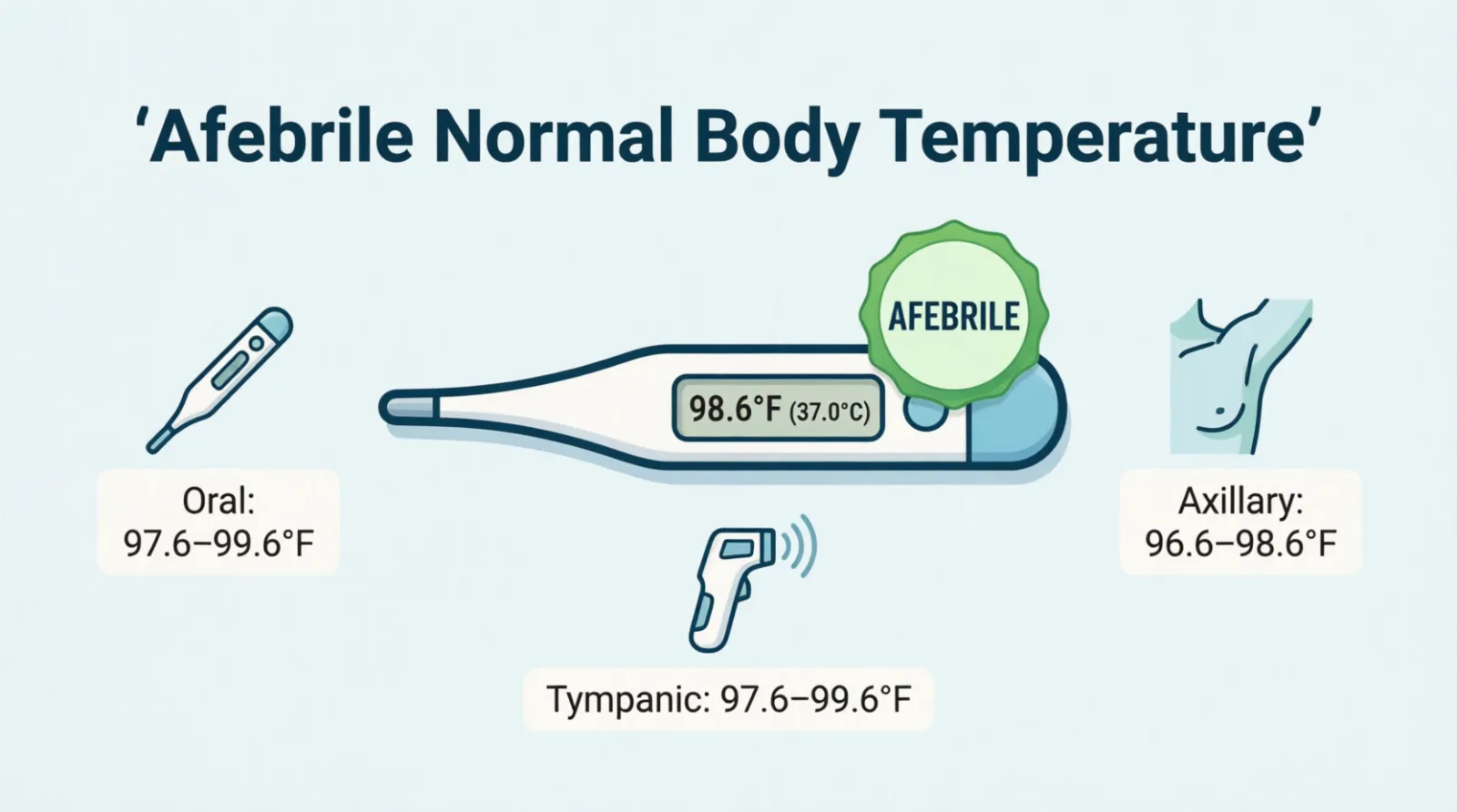
As a CNA student, you'll hear the term afebrile in clinical settings and on exams. Understanding what it means and how to measure it accurately is essential for providing safe patient care. In simple terms, afebrile means a person does not have a fever, their body temperature is within the normal range.
What Does Afebrile Mean?
The word afebrile comes from the prefix a- (without) and febrile (fever). So, if a resident is afebrile, they are fever-free. A fever is generally defined as a temperature of 100.4°F (38°C) or higher. Therefore, any temperature below that threshold is considered afebrile.
However, "normal" body temperature can vary slightly depending on the measurement site and the individual. The most common average is 98.6°F (37°C) orally, but it's normal to see ranges from 97°F to 99°F (36.1°C to 37.2°C).
Normal Temperature Ranges by Measurement Site
As a CNA, you'll take temperatures using different methods. Each site has its own normal range:
- Oral: 97.6°F to 99.6°F (36.4°C to 37.6°C)
- Axillary (armpit): 96.6°F to 98.6°F (35.9°C to 37°C), typically 0.5°F to 1°F lower than oral
- Tympanic (ear): 96.6°F to 99.7°F (35.9°C to 37.6°C)
- Rectal: 98.6°F to 100.6°F (37°C to 38.1°C), typically 0.5°F to 1°F higher than oral
- Temporal (forehead): 96.6°F to 99.6°F (35.9°C to 37.6°C)
Knowing these ranges helps you determine if a temperature is afebrile or febrile. Always document the site used, as this affects interpretation.
Why Afebrile Matters in CNA Practice
Monitoring temperature is a critical part of vital signs. A fever can indicate infection, inflammation, or other medical conditions. As a CNA, you must report any temperature that is above the normal range to the nurse promptly. Conversely, an unusually low temperature (hypothermia) also requires reporting.
Documenting a resident as afebrile provides a baseline for comparison. If their temperature rises later, the nurse can quickly identify a potential issue. Accurate measurement and reporting are key responsibilities outlined in the CNA scope of practice.
How to Measure Temperature Accurately
Follow these steps to ensure you get a reliable reading:
- Gather equipment: Clean thermometer, probe cover, gloves, and alcohol wipes.
- Perform hand hygiene and don gloves.
- Explain the procedure to the resident and obtain consent.
- Position the thermometer correctly:
- Oral: under the tongue, to one side, and ask the resident to close their lips.
- Axillary: dry the armpit, place the thermometer in the center, and hold the arm down.
- Tympanic: gently pull the ear back and up (adult) or back and down (child) and insert the probe.
- Rectal: use lubricant, insert gently, and never leave the resident unattended.
- Wait for the reading (usually a beep).
- Remove and dispose of the probe cover, clean the thermometer, and remove gloves.
- Perform hand hygiene and document the temperature, site, and time.
For more detailed guidance on vital signs, see our radial pulse measurement guide, which follows similar principles.
Febrile vs. Afebrile: What's the Difference?
A resident is febrile if their temperature is elevated, generally 100.4°F (38°C) or higher. Fever is a sign that the body is fighting something, often an infection. Other signs of fever include chills, sweating, flushed skin, and increased heart rate.
If you measure a febrile temperature, report it to the nurse immediately. Do not administer any fever-reducing medication, that's outside your scope. The nurse will assess the resident and determine the next steps.
Common Questions About Afebrile
Is 99°F considered afebrile?
Yes, 99°F is generally considered afebrile for oral measurements. However, if a resident's baseline is lower, a rise to 99°F might be significant. Always consider the individual's normal range.
Can someone be afebrile but still have an infection?
Yes, especially older adults or those with weakened immune systems. They may not mount a fever even with a serious infection. Watch for other signs like confusion, lethargy, or changes in behavior.
What if I get an abnormal reading?
Recheck the temperature using the same method. If it remains abnormal, report to the nurse. Never ignore an abnormal vital sign.
Understanding afebrile is just one part of vital signs. To reinforce your knowledge, practice with our basic nursing care skills questions. These cover temperature, pulse, respiration, and blood pressure, all essential for the CNA exam and daily practice.
For official guidelines on temperature measurement and infection control, refer to the CDC's infection control guidelines.