Lice Symptoms: What CNA Students Need to Know
Published October 1, 2026
As a CNA, you play a critical role in monitoring residents' health and reporting changes to the nurse. Recognizing lice symptoms early can prevent outbreaks in long-term care facilities. Lice are tiny parasites that feed on human blood and cause intense itching. While lice are not a serious medical condition, they are highly contagious and can spread quickly in close-living environments. This guide covers the key signs and symptoms of lice, how to differentiate them from other conditions, and what to do if you suspect an infestation.
What Are Lice?
Lice are wingless insects that live on the human body. There are three types that affect humans: head lice, body lice, and pubic lice. Head lice infest the scalp, body lice live in clothing and bedding and only crawl onto the skin to feed, and pubic lice are found in the genital area. In nursing homes, head and body lice are the most common concerns. Lice cannot jump or fly; they spread through direct contact with an infested person or their belongings, such as combs, hats, or bedding.
Common Lice Symptoms
The hallmark symptom of lice is itching, but it can take weeks for itching to begin the first time a person is infested. Other signs include:
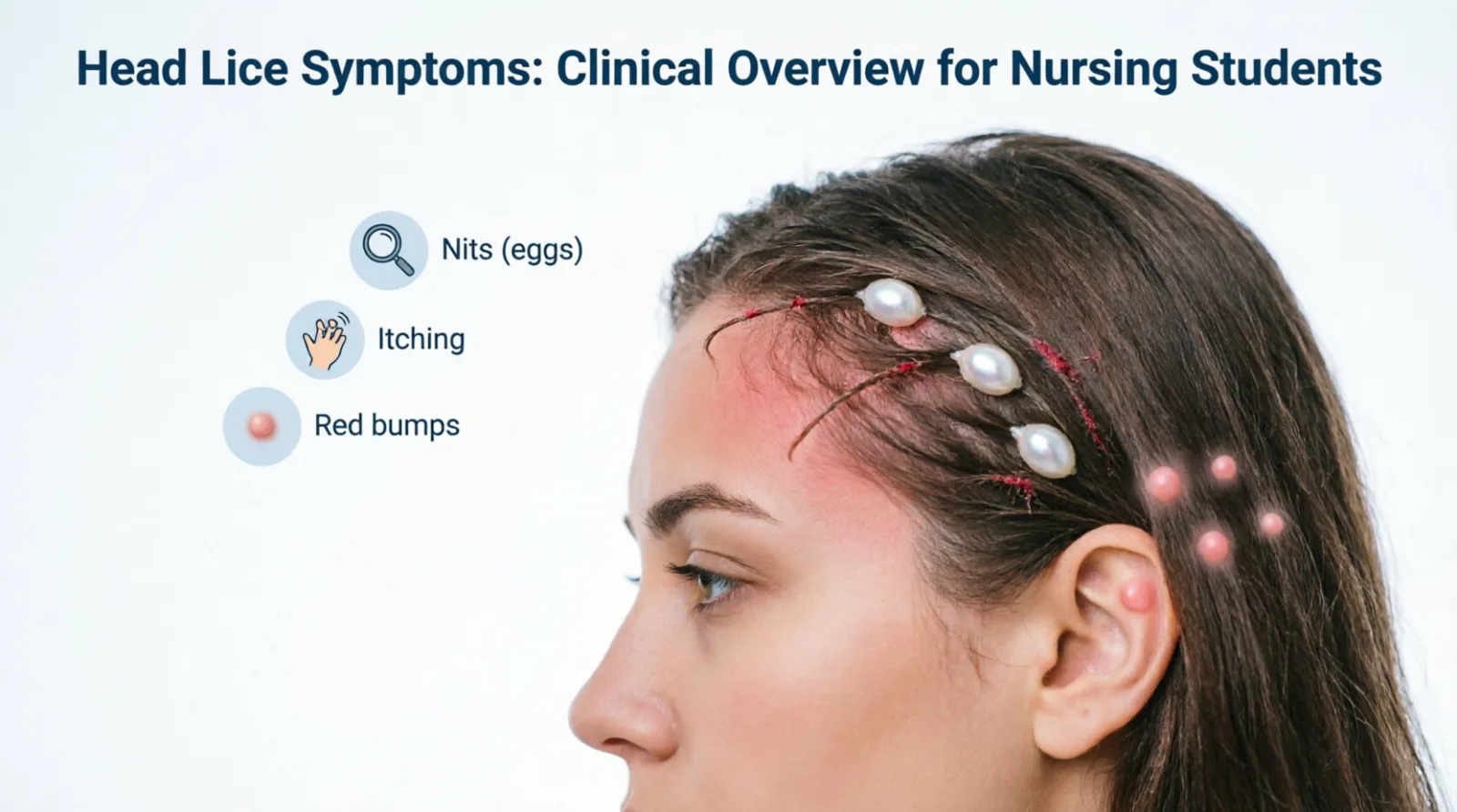
- Intense itching on the scalp, neck, shoulders, or other hairy areas. Itching is an allergic reaction to lice saliva.
- Visible lice or nits (eggs) on hair shafts, clothing seams, or skin. Nits are tiny, oval-shaped, and often yellow, white, or tan. They are firmly attached to hair and do not flake off like dandruff.
- Red bumps or sores from scratching, which can become infected.
- Irritability and difficulty sleeping, as lice are more active in the dark.
- Feeling of something crawling on the skin or hair.
Body lice often cause itching and rash on the torso, armpits, and groin. Unlike head lice, body lice and their eggs are usually found in the seams of clothing and bedding, not on the skin itself.
How to Check for Lice
If you suspect lice, perform a careful examination in a well-lit area. Use a fine-toothed nit comb and part the hair in small sections. Look close to the scalp, behind the ears, and at the nape of the neck. For body lice, inspect the seams of the resident's clothing and bedding. Remember that nits are glued to the hair shaft and are difficult to remove, whereas dandruff or hair spray residue can be easily brushed away. If you find lice or nits, report immediately to the nurse and follow facility protocol.
Differentiating Lice from Other Conditions
Lice symptoms can mimic other skin conditions. For example, scabies also causes intense itching but is caused by a mite that burrows into the skin, often between fingers and toes. Dandruff produces flaky skin that is easily removed. Seborrheic dermatitis can cause red, scaly patches. When in doubt, always consult the nurse for a proper diagnosis.
What to Do If You Find Lice
If you detect lice on a resident, take these steps:
- Report to the nurse in charge immediately. Do not attempt treatment without orders.
- Isolate the resident if directed, to prevent spread.
- Wear gloves and avoid direct head-to-head contact.
- Disinfect personal items like combs, brushes, and hats. Machine wash bedding and clothing in hot water and dry on high heat.
- Check other residents who may have had close contact.
- Educate the resident and family on prevention and treatment.
Treatment typically involves over-the-counter or prescription medicated shampoos or lotions. For body lice, improved hygiene and clean clothing are essential. As a CNA, you may assist with applying treatments as directed by the nurse.
Prevention and Infection Control
Preventing lice infestations is a key part of infection control in any healthcare setting. Encourage residents not to share personal items such as combs, hats, or towels. Regularly inspect residents who are at higher risk, such as those with compromised immunity or poor hygiene. Follow standard precautions, including hand hygiene and proper handling of linens. For more detailed infection control strategies, see our CNA infection control exam tips.
Lice and the CNA Exam
Understanding lice symptoms is not just important for clinical practice; it may also appear on the CNA written exam. Questions about infection control, skin conditions, and resident care often include lice as a topic. To test your knowledge, try our CNA specialized care prep or explore common CNA test questions. Practicing with realistic scenarios will help you answer confidently.
Key Takeaways for CNAs
- Lice cause itching and are spread by direct contact.
- Nits are firmly attached to hair and do not flake off.
- Report any suspected lice to the nurse immediately.
- Follow facility protocols for treatment and disinfection.
- Prevent spread by not sharing personal items and practicing good hand hygiene.
By staying vigilant, you can help protect your residents and yourself from lice infestations. For more clinical skills guidance, visit our CNA knowledge exams section. Additionally, the CDC provides comprehensive information on lice for further reference.