Prevent Bacteria Spread in Female Peri Care: CNA Guide
Published October 1, 2026
Perineal care, often called peri care, is a fundamental CNA clinical skill that directly impacts resident safety. Because the perineal area is warm, moist, and close to the urinary and rectal openings, it is especially vulnerable to bacterial growth. Performing female peri care correctly is not just about cleanliness; it is a critical infection control measure. This guide walks you through evidence-based steps to prevent the spread of bacteria during female perineal care, from setup to documentation.
Why Female Peri Care Requires Extra Attention
The female perineum has a shorter urethra than the male, making it easier for bacteria from the rectum to reach the bladder and cause urinary tract infections (UTIs). According to the CDC, UTIs are among the most common healthcare-associated infections, and many are preventable with proper hygiene. As a CNA, your technique during peri care can either stop bacteria in their tracks or move them closer to vulnerable openings.
Step-by-Step: Preventing Bacterial Spread During Female Peri Care
Follow these steps every time, whether you are performing routine care or cleaning after incontinence.
1. Prepare Before You Enter the Room
- Perform hand hygiene with soap and water or alcohol-based hand rub.
- Gather supplies: clean gloves, peri washcloths or disposable wipes, a basin of warm water (if using), a waterproof pad, and a bath blanket for privacy.
- Check for allergies to soaps, lotions, or wipes.
2. Set Up a Clean Field
- Explain the procedure to the resident and provide privacy.
- Position the resident on her back with knees bent and separated (dorsal recumbent).
- Place a waterproof pad under the buttocks.
- Don clean gloves. If the resident is incontinent, wear additional PPE as needed.
3. Clean From Front to Back, Always
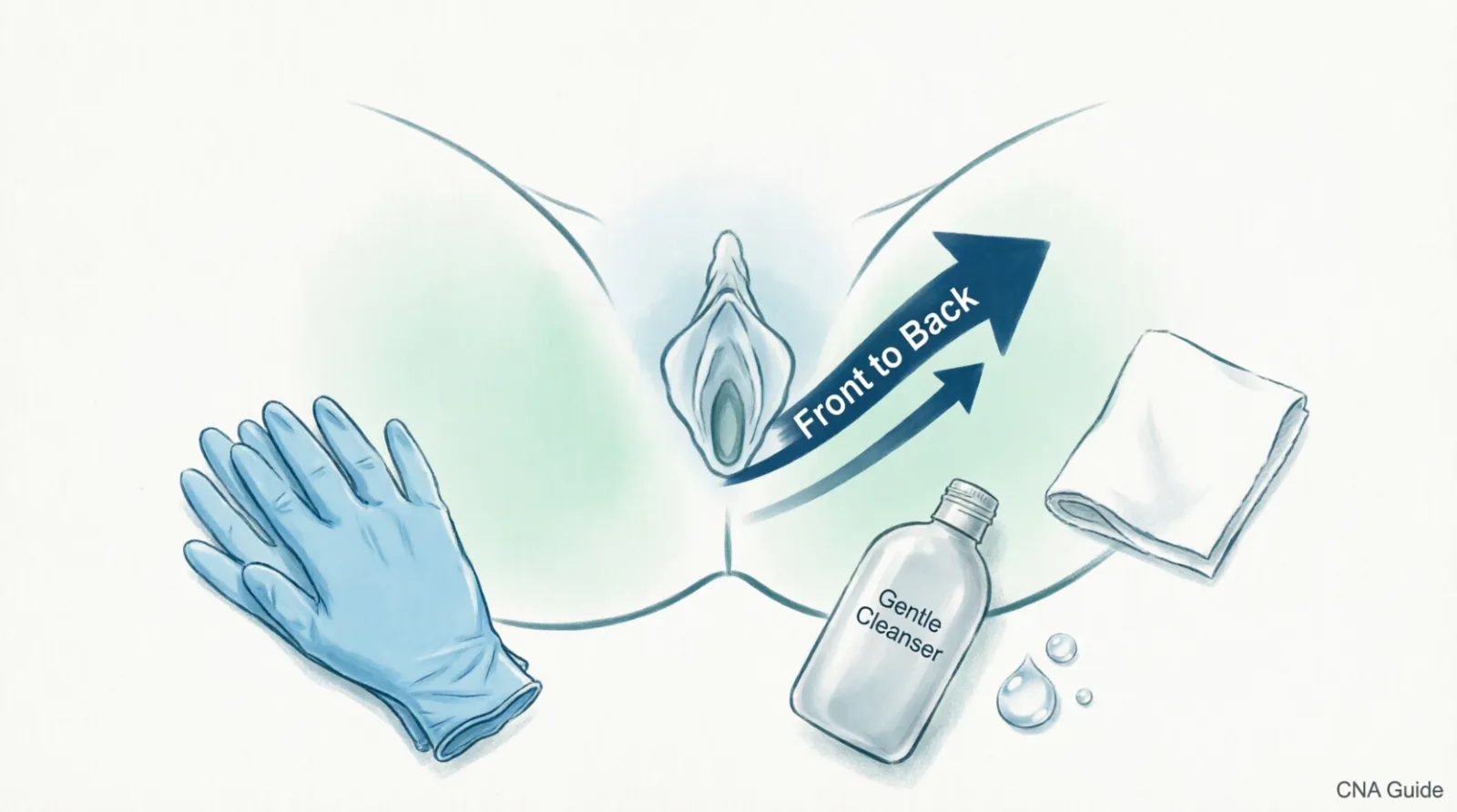
This is the single most important rule. Wipe from the pubic area toward the rectum, never the reverse. Using a new wipe or a clean part of the washcloth for each stroke prevents dragging rectal bacteria to the urethra.
- Separate the labia majora gently with your non-dominant hand.
- Using your dominant hand, cleanse the labia majora from top to bottom.
- Use a fresh wipe to clean the labia minora, again front to back.
- Finally, clean the vaginal opening and then the perineal area and anus, using a new wipe for each area.
If you are ever unsure about the sequence, remember: cleanest area first, dirtiest area last.
4. Rinse and Dry Thoroughly
- Rinse with warm water using a clean washcloth or peri bottle.
- Pat dry from front to back. Moisture encourages bacterial growth, so do not skip drying.
5. Remove Gloves and Perform Hand Hygiene
- Remove gloves by turning them inside out, touching only the inside of the glove.
- Discard gloves in a lined trash container.
- Perform hand hygiene immediately.
6. Document and Report
Note any signs of infection, redness, swelling, unusual odor, discharge, or complaints of burning. Report these to the nurse. Accurate documentation is a core CNA responsibility; for more on what to record, see our documentation questions and answers.
Common Mistakes That Spread Bacteria
- Wiping back to front.
- Reusing the same washcloth area without folding or replacing it.
- Touching the resident’s skin after touching the anus without changing gloves.
- Using too much soap and not rinsing well, which can irritate skin and lead to infection.
- Forgetting to clean the perineal area after each incontinent episode.
Infection Control Principles You Can Apply Everywhere
The same principles, clean to dirty, front to back, fresh supplies each time, apply to other clinical skills. For a deeper dive into breaking the chain of infection, review our CNA infection control exam tips. And to test your understanding of peri care and related skills, try our CNA skills test practice PDF.
When to Seek Help
If you notice signs of a urinary tract infection (cloudy urine, foul odor, fever, confusion) or skin breakdown, report immediately. The CDC offers excellent resources on catheter-associated UTI prevention that reinforce these hygiene practices.
Mastering female peri care is a mark of a competent, compassionate CNA. By following these steps, you protect your residents from preventable infections and demonstrate the professionalism that defines quality care.