
Residents Rights CNA: Essential Guide for Nurse Aides
Published October 6, 2026
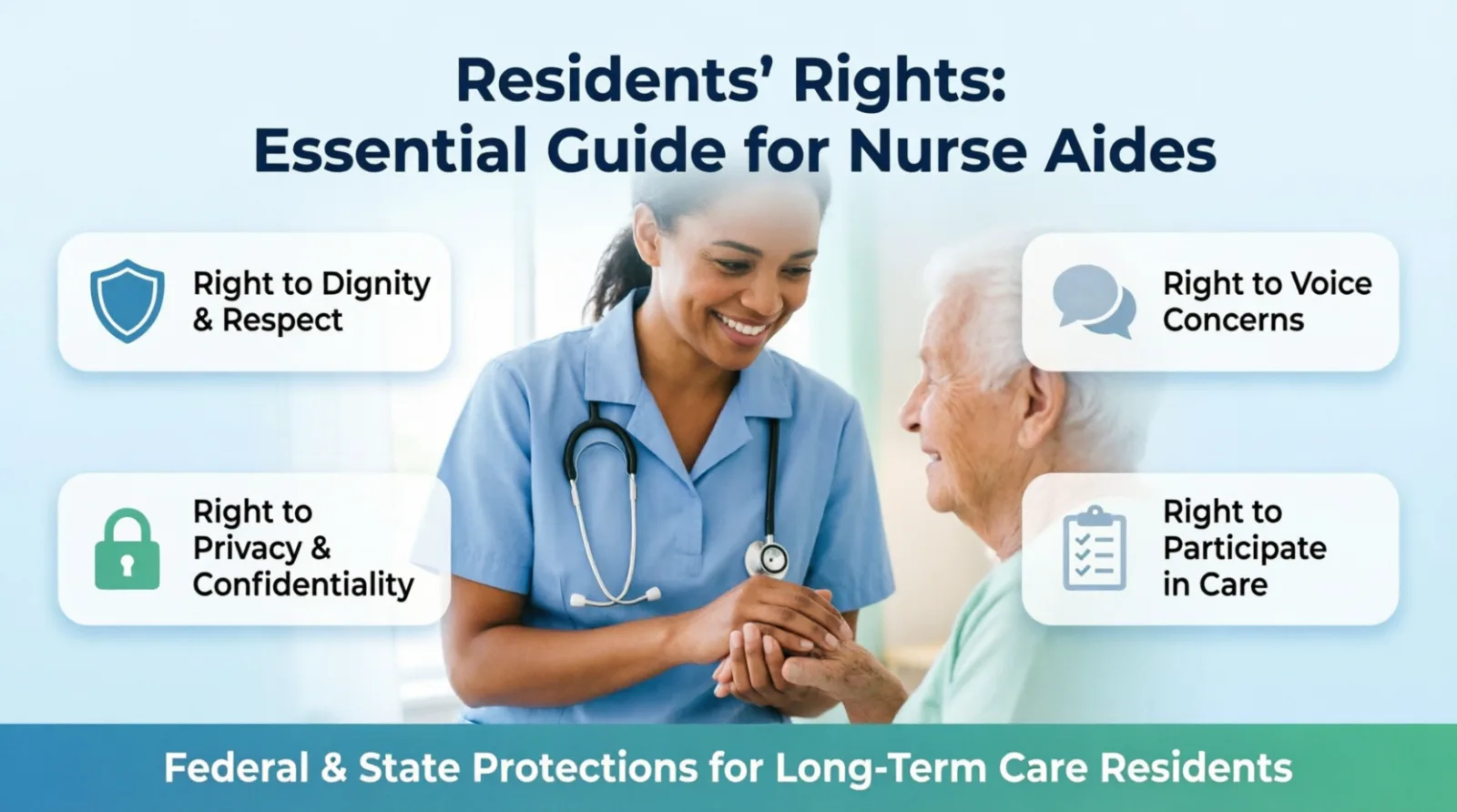
As a CNA, you are the frontline advocate for residents' rights. Understanding these rights is not just a test topic, it's a legal and ethical duty that shapes every interaction. Residents' rights are protected by federal law, and as a nurse aide, you play a critical role in upholding them.
What Are Residents' Rights?
Residents' rights are the legal entitlements of individuals living in long-term care facilities. They are mandated by the Centers for Medicare & Medicaid Services (CMS) and enforced through state surveys. These rights ensure that residents receive dignified, respectful care and maintain control over their lives.
Key rights include:
- Dignity and respect: Residents must be treated with courtesy and respect at all times.
- Privacy: Personal and medical information must remain confidential, and physical privacy during care is required.
- Freedom from abuse and neglect: Residents have the right to be free from physical, emotional, and financial harm.
- Self-determination: Residents can make choices about their care, daily routine, and activities.
- Communication: They can voice grievances without fear of retaliation and access visitors, mail, and phone calls.
- Informed consent: Residents must be informed of and consent to treatments and care plans.
Why Residents' Rights Matter for CNAs
As a CNA, you are often the person who spends the most time with residents. You witness their daily lives, and you are in a unique position to protect their rights. When you uphold these rights, you build trust, improve quality of life, and reduce the risk of complaints or legal issues for your facility.
Understanding residents' rights is also a core component of CNA certification exams. Many state tests include questions on this topic, and practical skills evaluations require you to demonstrate respect for privacy and dignity. For a deeper dive into what you can and cannot do as a CNA, see our guide on CNA scope of practice.
How to Uphold Residents' Rights in Daily Care
Here are practical ways to protect residents' rights every day:
1. Respect Privacy and Confidentiality
Always knock before entering a resident's room, close curtains and doors during personal care, and never discuss a resident's condition in public areas. Share information only with the care team on a need-to-know basis.
2. Promote Dignity
Address residents by their preferred name, speak to them directly (not over them), and involve them in decisions about their care. Even small choices, like what to wear or when to bathe, matter. For more on maintaining dignity during sensitive tasks, see our guide on female peri care.
3. Support Self-Determination
Residents have the right to make choices, even if you disagree. If a resident refuses care, respect their decision and report it to the nurse. Never force or threaten a resident.
4. Prevent Abuse and Neglect
Recognize signs of abuse (physical, emotional, sexual, financial) and neglect. Report any suspicion immediately to your supervisor or the state hotline. As a mandated reporter, you are legally obligated to do so.
5. Encourage Communication and Grievances
Listen to residents' concerns and help them file grievances if needed. Ensure they have access to visitors, mail, and phone calls. Never retaliate against a resident for voicing a complaint.
Residents' Rights on the CNA Exam
Many CNA exams include questions on residents' rights. You might be asked about privacy during care, how to respond to a resident's refusal, or what constitutes abuse. To practice, try our CNA knowledge exams which cover these topics. Also, review common scenarios like the one in our FAQ: purpose of restraints.
Legal and Ethical Obligations
Federal law (the Nursing Home Reform Act of 1987) and state regulations protect residents' rights. Violations can lead to fines, loss of certification, and even criminal charges. As a CNA, you are legally required to report abuse and neglect. Your state's Nurse Aide Registry may also have specific requirements. Always follow your facility's policies and your state's guidelines.
Key Takeaways for CNAs
- Residents' rights are legal entitlements, not privileges.
- You are a key protector of these rights in daily care.
- Respect privacy, dignity, and self-determination.
- Report abuse and neglect immediately.
- Know your state's specific regulations.
By upholding residents' rights, you not only comply with the law but also provide compassionate, person-centered care that makes a real difference in residents' lives.