What Disqualifies You from CNA? Key Disqualifiers Explained
Published September 25, 2026
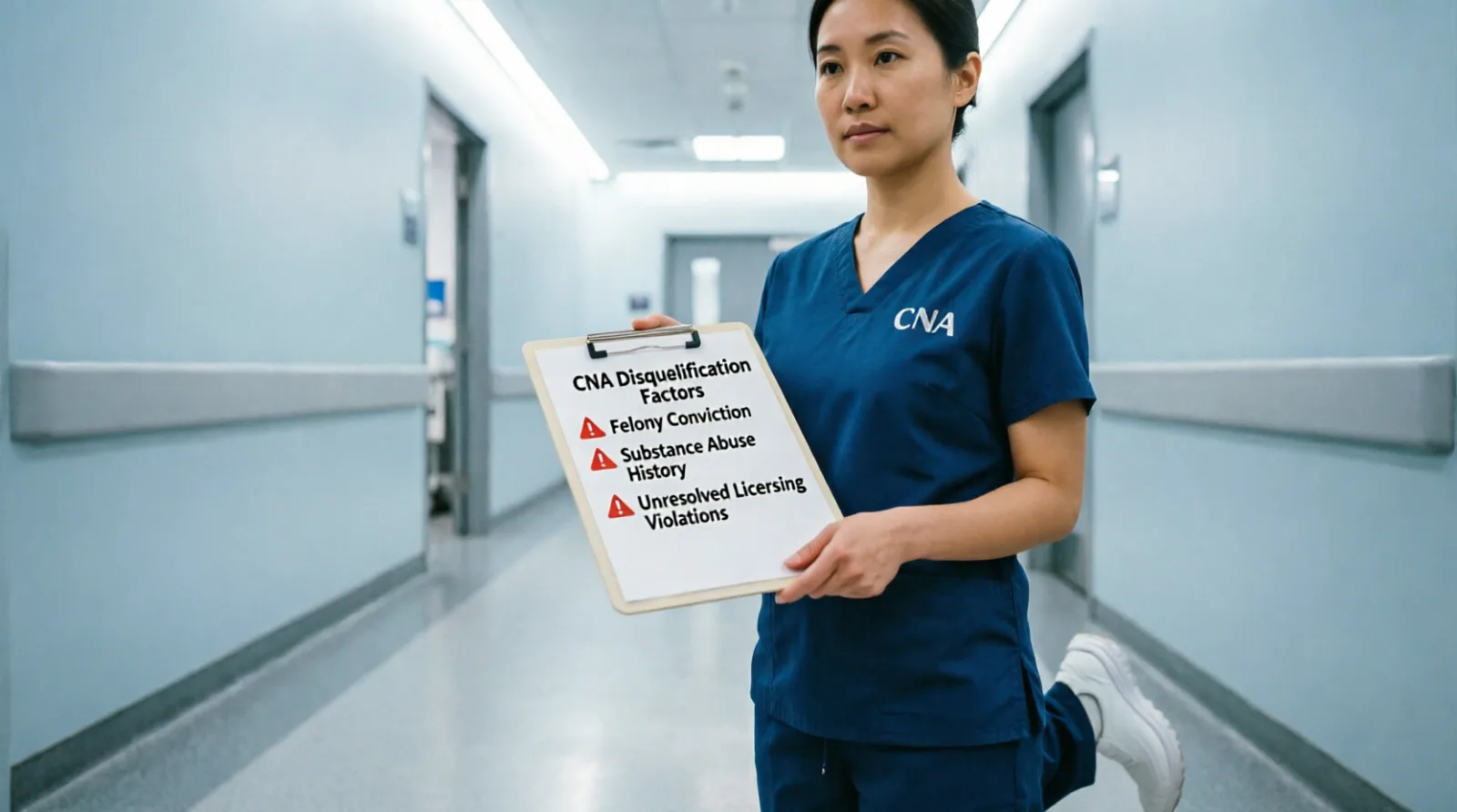
Becoming a Certified Nursing Assistant (CNA) is a rewarding career path, but not everyone qualifies. Understanding what disqualifies you from CNA certification can save you time and help you address potential issues early. This guide covers common disqualifiers, from criminal background checks to health and testing requirements, so you know what to expect.
Criminal Background Checks
Most states require a criminal background check as part of the CNA certification process. Certain convictions can automatically disqualify you, especially those involving violence, theft, or patient abuse. The Centers for Medicare & Medicaid Services (CMS) sets federal guidelines that states follow, but each state may have its own list of disqualifying offenses. Common disqualifying convictions include:
- Felony convictions for violent crimes (e.g., assault, murder)
- Sexual offenses or crimes against children or vulnerable adults
- Drug-related felonies within a certain timeframe
- Theft or fraud convictions
- Any offense that appears on a state nurse aide registry
Some states allow you to petition for a waiver or provide evidence of rehabilitation. However, certain offenses, like patient abuse, may result in a permanent ban. Always check your state's nurse aide registry for specific rules.
Health and Physical Requirements
CNA work is physically demanding. You must be able to lift patients, stand for long periods, and perform tasks like bathing and dressing. While not a formal disqualifier, a medical condition that prevents you from safely performing essential functions could end your training or employment. Additionally, most healthcare facilities require:
- A negative tuberculosis (TB) test
- Up-to-date vaccinations (e.g., hepatitis B, influenza, COVID-19)
- Physical stamina to handle the job's demands
If you have a disability, you may still qualify with reasonable accommodations, as protected by the Americans with Disabilities Act (ADA).
Substance Abuse and Drug Testing
Many CNA programs and employers require a drug screening. A positive test for illegal substances or misuse of prescription medications can disqualify you. Even if you pass the initial test, ongoing substance abuse could lead to termination and loss of certification. Some states offer rehabilitation programs that allow you to retain your certification if you complete treatment.
Failure to Pass the CNA Exam
To become certified, you must pass both a written (or oral) exam and a skills demonstration. Failing either portion can delay or disqualify you from certification. Most states allow retakes, but there may be limits. For example, you might need to wait a certain period or complete additional training before retesting. If you fail multiple times, you may be required to retake the entire training program. To improve your chances, consider using free CNA practice tests with answers to identify weak areas.
Lack of Required Training Hours
Federal law requires a minimum of 75 hours of training for CNAs, but many states require more. If you don't complete an approved training program, you won't be eligible to sit for the certification exam. Additionally, you must complete a certain number of clinical hours. Skipping or failing to document these hours can disqualify you from certification.
Age and Education Requirements
While not typically a disqualifier, you must meet minimum age requirements (usually 16 or 18, depending on the state) and have a high school diploma or equivalent. Some states allow students to enroll in CNA programs while still in high school, but you must meet the age requirement by the time you take the exam.
Prior Disciplinary Actions
If you've been previously certified as a CNA or another healthcare professional and had your license revoked or suspended, that action will likely disqualify you from becoming a CNA again, at least temporarily. The state nurse aide registry tracks these actions, and employers can access this information.
Other Potential Disqualifiers
- Fraud or misrepresentation: Providing false information on your application or during the certification process can lead to permanent disqualification.
- Refusal to submit to a background check or drug test: This is often treated as an automatic disqualifier.
- Inability to communicate effectively: CNAs must read, write, and speak English well enough to follow instructions and document care. Some states require English proficiency tests.
How to Check Your Eligibility
If you're concerned about a potential disqualifier, contact your state's nurse aide registry or the board of nursing. They can provide specific information about your situation. You may also want to consult with a legal professional if you have a criminal record.
For more guidance on CNA certification, explore our CNA certification FAQs and study guides and exam tips.
Final Thoughts
While certain factors can disqualify you from becoming a CNA, many are not permanent. Understanding the requirements and addressing issues proactively can help you pursue this fulfilling career. Always verify rules with your state's specific regulations, as they can vary.