
CNA Study Tips: Areas at Higher Risk of Skin Breakdown
Published October 6, 2026
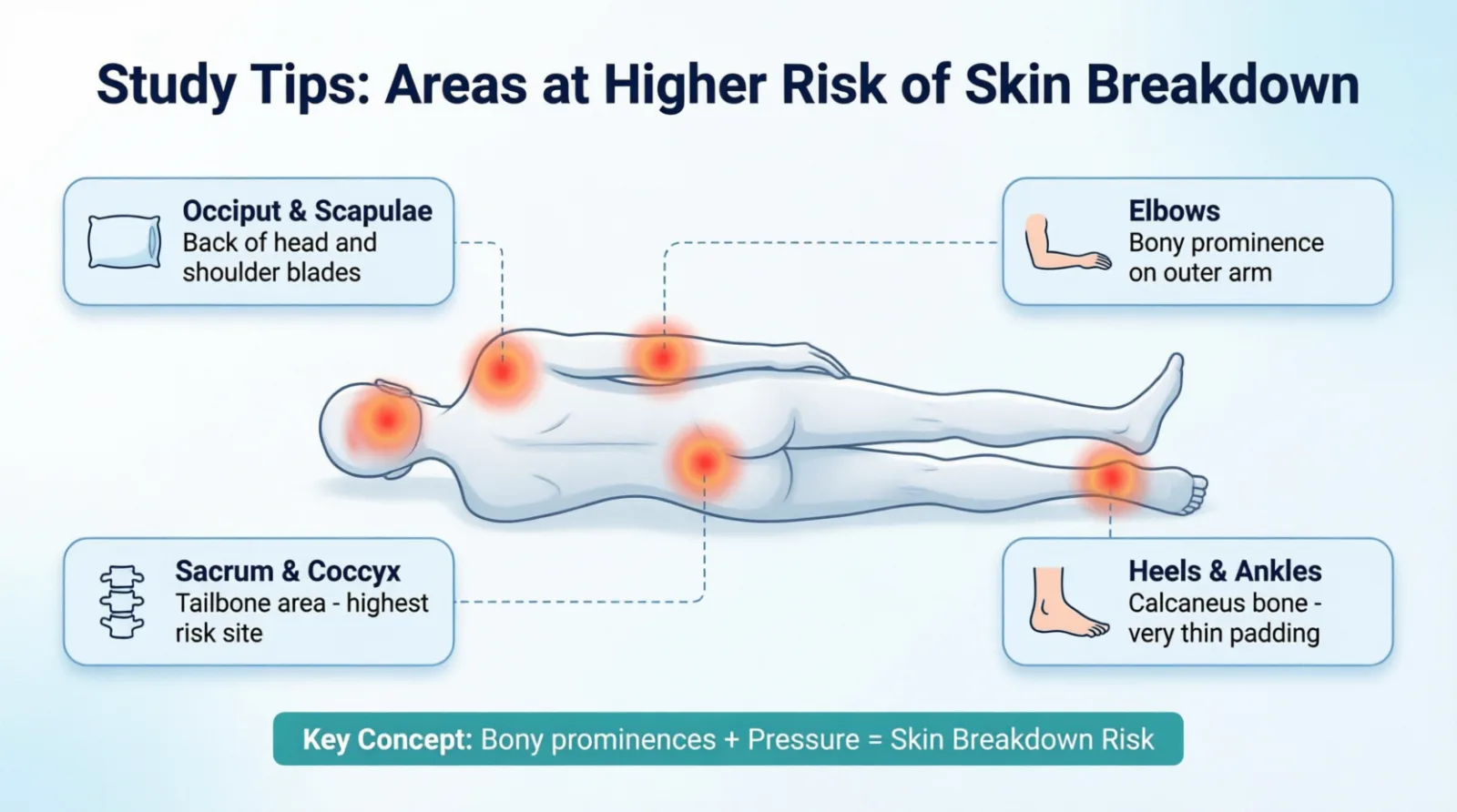
As a CNA, protecting your residents' skin is one of your most important responsibilities. Skin breakdown, also called pressure injuries or pressure ulcers, can develop quickly in people with limited mobility, poor nutrition, or chronic illness. Knowing which areas are at a higher risk of skin breakdown helps you focus your care and spot problems early. This guide covers the key risk areas, why they are vulnerable, and how you can prevent skin breakdown in your daily practice.
Why Some Areas Are More Prone to Skin Breakdown
Skin breakdown happens when prolonged pressure cuts off blood flow to the skin and underlying tissues. Areas that bear the most weight or rub against surfaces are at the highest risk. Other factors include moisture, friction, shear, and poor circulation. As a CNA, you will assess these areas during routine care and report any changes to the nurse immediately.
High-Risk Areas for Skin Breakdown
Certain bony prominences and skin folds are especially vulnerable. The following areas are at a higher risk of skin breakdown:
- Sacrum and coccyx (tailbone): The most common site for pressure ulcers, especially in residents who lie on their backs.
- Heels: Heels have little padding and are often overlooked. They can develop deep ulcers quickly.
- Hips and trochanters: Pressure from side-lying positions affects these areas.
- Elbows: Especially in residents who are very thin or who rest their elbows on hard surfaces.
- Shoulder blades and spine: Bony areas that press against mattresses.
- Back of the head: Particularly in residents who are immobile or unconscious.
- Ears: Oxygen tubing or positioning can cause pressure.
- Ankles and feet: From shoes, casts, or dependent positioning.
- Under breasts and skin folds: Moisture and friction increase risk.
- Perineal area: Moisture from incontinence can lead to skin maceration and breakdown.
Risk Factors That Increase Skin Breakdown
Understanding why some residents are more susceptible helps you prioritize care. Key risk factors include:
- Immobility: Residents who cannot reposition themselves.
- Incontinence: Moisture softens skin and makes it easier to damage.
- Poor nutrition and hydration: Skin needs protein, vitamins, and fluids to stay healthy.
- Altered mental status: Residents who are confused may not feel or report discomfort.
- Age: Older skin is thinner and less elastic.
- Medical conditions: Diabetes, vascular disease, and obesity affect circulation and skin integrity.
How CNAs Can Prevent Skin Breakdown
Prevention is a team effort, but CNAs are on the front lines. Follow these essential practices:
- Reposition every two hours: Turn and reposition immobile residents at least every two hours, or as directed by the care plan. Use pillows to offload pressure from heels and bony areas.
- Keep skin clean and dry: Cleanse gently after each incontinence episode. Use barrier creams to protect the skin from moisture.
- Perform skin assessments: During routine care, check high-risk areas for redness, warmth, swelling, or breaks in the skin. Report any changes immediately.
- Use proper transfer techniques: Avoid dragging residents during transfers. Use a gait belt, slide sheet, or mechanical lift to reduce friction and shear. For a refresher on safe transfers, see our CNA mobility skill questions.
- Encourage good nutrition and hydration: Offer fluids frequently and assist with meals. Report poor intake to the nurse.
- Promote mobility: Encourage residents to shift their weight and move as much as they are able.
- Use pressure-redistribution surfaces: Make sure specialty mattresses and cushions are used correctly.
What to Document and Report
Accurate documentation is critical. When you notice any sign of skin breakdown, document the location, size, color, and any drainage. Use objective language and avoid guessing. For example, write "reddened area on sacrum, approximately 2 cm, does not blanch" rather than "looks bad." Report to the nurse promptly. Understanding subjective vs objective observation helps you chart correctly.
Study Tips for CNA Exams
Skin breakdown is a frequent topic on the CNA written exam and skills test. To remember high-risk areas, use the mnemonic "SACHES": Sacrum, Ankles, Coccyx, Heels, Elbows, Shoulder blades. Practice questions that ask you to identify risk areas or appropriate interventions. Our free CNA practice test with answers includes questions on skin care and pressure ulcer prevention.
For a deeper dive into infection control and skin integrity, the CDC's Long-term Care resources offer evidence-based guidance. Additionally, the CMS Nursing Home Quality Initiative provides information on pressure ulcer prevention standards.
By knowing the areas at a higher risk of skin breakdown and following prevention protocols, you can protect your residents and excel on your CNA exam. Stay observant, document carefully, and always report changes early.