What Is the Hardest CNA Skill? Top Challenges & Tips
Published September 4, 2026
As a Certified Nurse Aide (CNA) student, you’ve probably heard that the skills test is the most nerve-wracking part of certification. But which skill trips up the most test-takers? While opinions vary, certain skills are widely considered harder than others because they demand precision, infection control, and body mechanics. In this guide, we’ll break down what is the hardest CNA skill, why it’s challenging, and how you can master it for both your exam and real-world care.
What Is the Hardest CNA Skill on the Exam?
Most CNA instructors and students agree: perineal care (peri-care) ranks among the hardest skills. It requires meticulous technique, infection prevention, and respect for patient dignity. Other notoriously difficult skills include measuring blood pressure with a manual cuff, transferring a resident from bed to wheelchair, and handwashing with proper timing and technique, though handwashing is foundational, it’s often failed because testers rush or skip steps.
Why Perineal Care Is So Challenging
Peri-care is tough because it involves intimate body areas, strict infection control, and a specific order of steps. You must always clean from front to back (especially for females) to prevent urinary tract infections, use a clean area of the washcloth for each stroke, and maintain privacy throughout. Many students feel anxious about the procedure, which leads to forgotten steps or awkward handling. Add the pressure of a timed test, and it’s easy to see why peri-care is a top contender for “hardest.”
Manual Blood Pressure: A Close Second
Reading a manual blood pressure accurately is a skill that requires practice. You have to place the cuff correctly, find the brachial pulse, inflate to the right level, and release air slowly while listening for Korotkoff sounds. Test-takers often struggle with hearing the faint sounds or misreading the gauge. It’s a skill that demands both auditory and visual precision, making it a common point of failure on the CNA skills test.
Other Skills That Trip Up CNA Students
While peri-care and BP are top challenges, these skills also cause trouble:
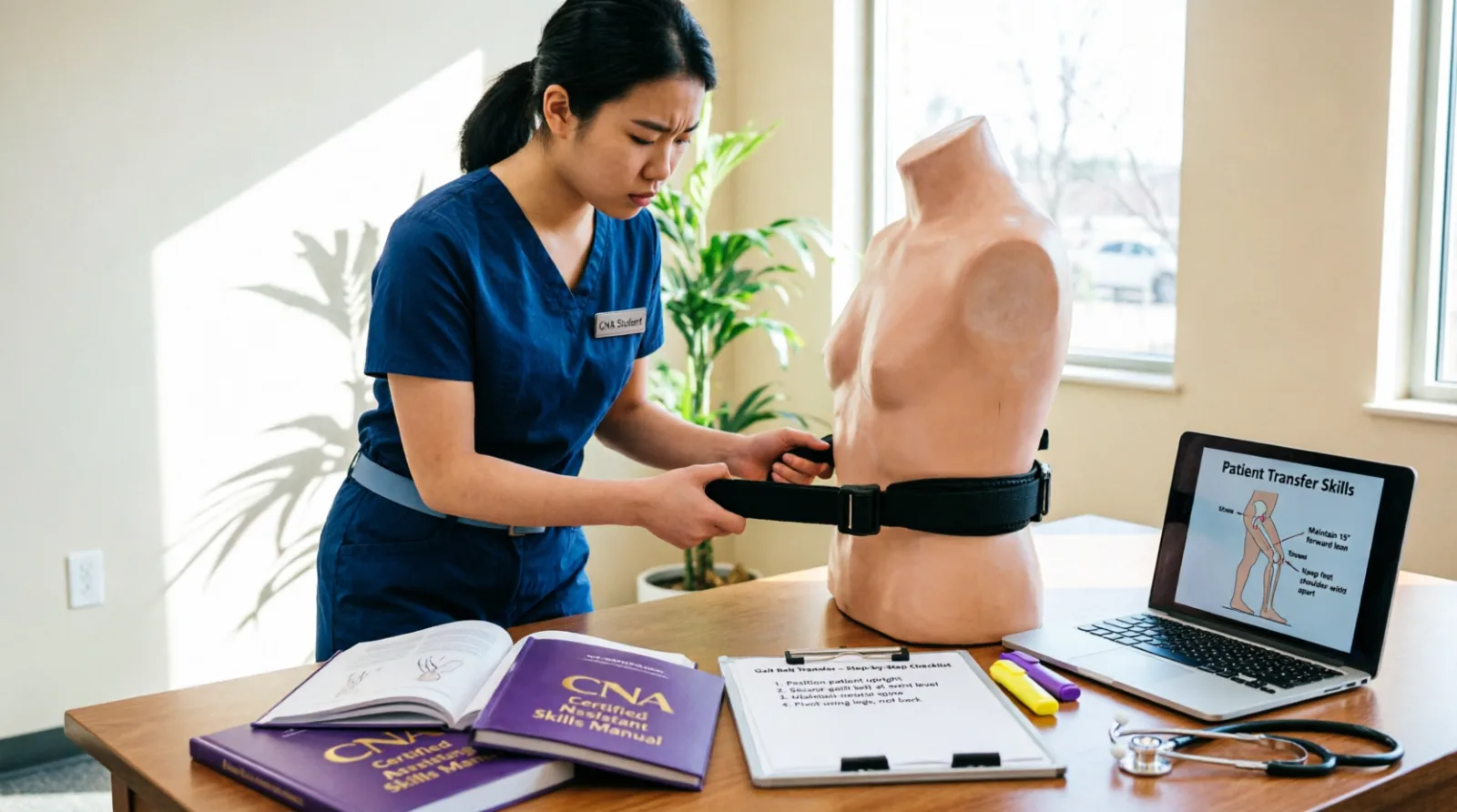
- Transferring and ambulating: Proper body mechanics and locking wheelchair brakes are critical. Many students forget to lock brakes or position the resident’s feet correctly.
- Dressing a resident with a weak arm: You must dress the weak side first and undress it last—a simple rule that’s easy to mix up under pressure.
- Feeding a resident: Alternating food types, offering small bites, and checking for choking require attention to detail.
- Measuring output: For urine output, you must calculate the amount accurately and record it correctly—math errors happen often.
Why These Skills Are Hard (Beyond the Steps)
Hard skills aren’t just about memorizing steps. They test your ability to:
- Maintain infection control: Any break in technique—like touching a clean surface with a contaminated glove—can fail you.
- Communicate with residents: You must explain each step and gain consent, which adds a layer of complexity.
- Adapt to the environment: In a real facility, you might have to adjust to a resident’s limitations or equipment quirks.
How to Master the Hardest CNA Skills
Preparation is your best defense. Here are practical strategies:
1. Practice with a Checklist
Use the exact checklist from your state’s testing provider (like Prometric or Pearson VUE). Practice each step out loud, in order, until it’s automatic. For instance, when washing your hands, say “I’m turning on the water, wetting my hands, applying soap…” This helps you remember every component.
2. Watch Demonstrations and Videos
Seeing a skill performed correctly can clarify confusing details. Watch your instructor’s demo, then search for reputable videos online. Pay attention to hand placement and timing.
3. Get Hands-On Feedback
Practice on a mannequin or with a friend, and ask them to critique you. Many students find that recording themselves reveals missed steps they didn’t notice in the moment.
4. Focus on Infection Control
Infection control is the backbone of every skill. Memorize the “clean to dirty” principle and always know when to change gloves. If you struggle with peri-care, practice using a simulation kit or even a simple doll to get comfortable with the sequence.
5. Take Practice Exams
While skills are hands-on, written practice tests reinforce the underlying knowledge. Try a free CNA practice test to identify areas where you’re weak on theory, such as infection control or body mechanics.
Real-World Perspective: What’s Hardest on the Job?
In actual care settings, many CNAs say the hardest skill isn’t a single procedure, it’s time management and emotional resilience. You might have to prioritize between a resident who needs feeding and another who needs toileting. But mastering the technical skills listed above builds confidence and frees your mind to handle the human side.
Final Tips for Test Day
When you’re taking your skills exam, remember:
- Read the scenario carefully, don’t assume you know what’s asked.
- Verbalize your steps even if you think they’re obvious.
- If you forget a step, don’t panic; you can often correct it if you haven’t contaminated anything.
- Take a deep breath before you start. Nerves cause more failures than lack of knowledge.
If you’re still unsure about what to expect, check out our insights on the hardest part of a CNA test for more context. And remember, practice makes permanent, so practice correctly from day one.
Ultimately, the “hardest” skill is the one you haven’t practiced enough. With dedication and the right resources, you can turn your weakest skill into a strength. Good luck on your journey to becoming a certified nurse aide!